What if the key to achieving your weight loss goals wasn’t just about diet and exercise, but finding the right medication for you? Medications like Tirzepatide and Semaglutide are changing the game, offering powerful tools to help patients transform their health and confidence.
Both of these medications have shown some significant promise in helping patients achieve their weight loss goals, but they aren’t identical solutions. Each has its unique set of benefits, methods of action, and specific considerations.
At Balanced Aesthetics & Wellness, we provide personalized weight loss solutions. These include both Tirzepatide and Semaglutide so you can receive the care and treatment that best matches your weight loss journey.
Understanding Medical Weight Loss Treatments
Medical weight loss treatments are completely transforming the way people are achieving and maintaining a healthier weight. Medications like Tirzepatide and Semaglutide are part of a new generation of specialized therapies that are designed to help with weight loss by targeting specific hormonal pathways.
These treatments are prescribed based your medical history, weight loss goals, and any side effects you may have experienced when taking previous medications.
Choosing between Tirzepatide and Semaglutide often comes down to certain factors like efficacy, potential side effects, and cost. Both medications can be very effective for weight loss, but their differences can make one better for certain people than another.
So, which one is right for you? Let’s take a closer look.
What Is Semaglutide?
Semaglutide, known under brand names like Ozempic or Wegovy, is a GLP-1 receptor agonist. This means that it works by imitating a natural hormone in the body that helps regulate blood sugar levels, slows down digestion, and reduces appetite.
By curbing hunger and creating a sense of fullness, Semaglutide has become a very popular choice for people who want to lose weight while also managing other health concerns, like type 2 diabetes.
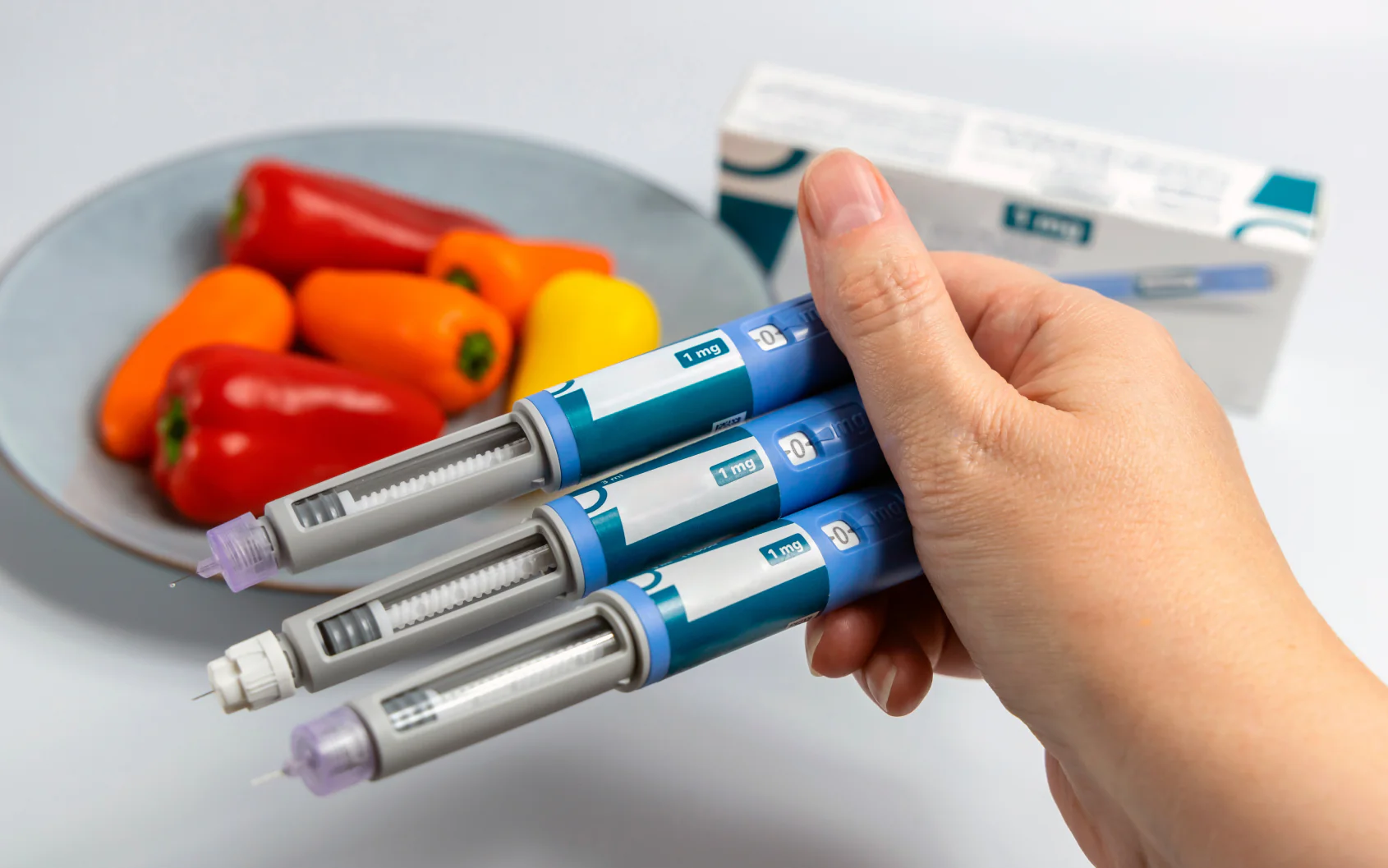
Semaglutide is administered through a once-weekly injection, which makes it convenient for most people. The results of taking Semaglutide are promising, with clinical trials showing significant weight loss in many patients when combined with a healthy diet and proper exercise plan.
What Is Tirzepatide?
Tirzepatide is a newer medication that targets two specific hormones, which enhances the medication’s effects even further. This dual-action approach helps Tirzepatide achieve even bigger weight loss results in some people compared to Semaglutide.
By targeting two separate hormones, Tirzepatide may be able to do more to help regulate appetite and improve metabolism.
Like Semaglutide, Tirzepatide is taken as a weekly injection. It is usually very well-tolerated, with fewer side effects reported by some patients. While it is more expensive than Semaglutide, many patients feel that the reduced side effects and potentially greater weight loss results make it a more worthwhile investment.
Dosage and Administration of Tirzepatide vs Semaglutide
Both medications are administered through a once-weekly injection, which you can perform themselves in the comfort of their own homes. The dosage for each treatment is usually adjusted over time to find the level that provides the best results with the fewest side effects.
With Semaglutide, doses often start low and are gradually increased to help the body adjust and reduce the likelihood of some of the most common side effects, such as nausea. Tirzepatide follows a similar approach, but because of its dual-action formula, some patients may find the adjustment period easier.
Your provider at Balanced Aesthetics & Wellness will guide you through the process, ensuring the dosage and administration schedule are customized to meet your specific needs and lifestyle.
Considering the Cost and Availability of Treatments
One of the biggest factors in deciding between Tirzepatide and Semaglutide is the cost. Tirzepatide is usually a little more expensive than Semaglutide. However, it’s also essential to consider the overall value of each medication, including the potential weight loss outcomes and the likelihood of side effects.
Both medications are available through medical providers like Balanced Aesthetics & Wellness, where our personalized consultations help ensure that each patient receives the treatment that best matches their goals, budget, and, most importantly, medical needs.
Frequently Asked Questions
How do Tirzepatide and Semaglutide work to promote weight loss?
Both medications target hormones involved in appetite regulation and digestion. Semaglutide targets the GLP-1 receptor, while Tirzepatide targets both GLP-1 and GIP hormone receptors, providing a dual effect that may help enhance weight loss outcomes.
What are the typical weight loss outcomes for patients using Tirzepatide vs Semaglutide?
Clinical studies suggest that both medications lead to significant weight loss. However, because of its dual-action formula, some patients may achieve greater results with Tirzepatide.
What are the primary side effects of Tirzepatide and Semaglutide when used for weight loss?
Common side effects include nausea, diarrhea, and mild digestive discomfort. Tirzepatide may cause fewer side effects for some patients, which can make it a more comfortable option for some people.
Take the First Step Toward Your Weight Loss Goals
At Balanced Aesthetics & Wellness, we are dedicated to helping you achieve your weight loss goals, improve your health, and look and feel your very best. Our team will help you decide between Tirzepatide and Semaglutide by carefully reviewing your health and weight loss goals and medical history and discussing personal preferences.
Schedule a consultation today to learn more about these treatments and discover how they can help you feel healthier, more confident, and in control of your wellness journey. Your journey to a healthier you starts here!
Frequently Asked Questions
—Semaglutide vs. tirzepatide — which is more effective for weight loss?
Clinical data suggests tirzepatide produces higher average weight loss than semaglutide — its dual GIP/GLP-1 mechanism targets two metabolic pathways versus one. But averages don’t predict individual outcomes, and some patients respond better to semaglutide.
Tirzepatide may offer additional benefit for patients with significant insulin resistance because the GIP pathway improves glucose metabolism beyond what GLP-1 alone provides. Semaglutide has a longer clinical track record and more extensive long-term safety data.
The side-effect profiles are similar (primarily GI: nausea, especially during dose escalation). Cost and availability may also factor into the decision — the landscape for both medications continues to evolve.
At Balanced, your provider determines which medication fits your metabolic profile based on labs, not trends. Some patients start on one and switch based on response. The medication matters less than the program around it — labs, monitoring, peptide support, and a transition plan.
Clinical trial data suggests tirzepatide produces higher average weight loss than semaglutide in head-to-head comparisons. But “better” depends on how your individual biology responds — and averages don’t predict individual outcomes.
Some patients tolerate semaglutide better with fewer GI side effects. Others respond more strongly to tirzepatide’s dual-receptor mechanism. Some patients who plateau on one medication see renewed progress when switching to the other. There’s no universal winner.
The more important question than “which is better” is: what’s actually driving your weight gain? If insulin resistance is a primary factor, tirzepatide’s GIP pathway may offer additional metabolic benefit. If appetite suppression is the main need, both are effective. If hormonal imbalance is contributing, neither medication fully addresses the root cause without concurrent hormone optimization.
At Balanced, we don’t default to one medication over the other. We look at your labs, your metabolic markers, your health history, and your goals — then prescribe accordingly. If the first choice isn’t producing expected results, we adjust.
GLP-1 medications for weight management are generally appropriate for adults with a BMI of 30 or above, or a BMI of 27 or above with at least one weight-related health condition (such as type 2 diabetes, hypertension, or high cholesterol). However, these are general guidelines — your provider evaluates your full clinical picture.
At Balanced, qualification isn’t just about BMI. We look at your metabolic labs, hormonal status, body composition, health history, and treatment goals. Some patients with a BMI under 30 have significant metabolic dysfunction that would benefit from GLP-1 therapy. Others might be better served by addressing hormonal imbalances or other root causes first.
Contraindications include a personal or family history of medullary thyroid carcinoma, MEN 2 syndrome, active pancreatitis, and pregnancy. Certain medical conditions and medications may require additional evaluation before starting.
If you’re unsure whether you qualify, the consultation process at Balanced answers that question definitively. We’d rather evaluate you thoroughly and determine you’re not a candidate than prescribe something that isn’t right for your biology.
—Can I get body contouring after GLP-1 weight loss?
Yes — and many patients find it the natural next step. GLP-1-assisted weight loss reduces total body fat, but it can’t control where fat comes from or address loose skin that remains after significant weight reduction. Body contouring and skin tightening treatments address the shape and texture changes that the scale doesn’t reflect.
At Balanced, post-weight-loss options include RF microneedling (Secret Pro) for skin tightening, body contouring treatments for stubborn residual fat deposits, and dermal fillers for facial volume restoration if needed. The timing matters — we typically recommend stabilizing at your target weight for 2–3 months before starting contouring treatments.
This is where Balanced’s full-spectrum model creates a unique advantage. Patients at a GLP-1-only clinic have to find a separate provider for the aesthetic work. Here, your medical weight loss provider and your aesthetic provider are under the same roof, which means your post-loss treatment plan is coordinated from the start.
Absolutely. GLP-1 medications are prescribed equally for men and women. The misconception that these are primarily women’s medications comes from marketing and social media trends — not clinical reality.
Men often present with a different metabolic profile than women: higher rates of insulin resistance, visceral fat accumulation, and metabolic syndrome. GLP-1 medications — particularly tirzepatide with its GIP pathway — can be especially effective for the insulin-resistant, belly-fat-dominant pattern common in men over 40.
At Balanced, our medical weight loss program for men often combines a GLP-1 with growth hormone peptides and, when indicated, testosterone optimization. This combination addresses body composition from multiple angles: the GLP-1 handles appetite and metabolic signaling, the peptide protects muscle, and testosterone (if low) supports lean mass, energy, and metabolic rate.
We also see men who are fitness-conscious but frustrated by stubborn abdominal fat despite strong diet and exercise habits. For this profile, a GLP-1 combined with Tesamorelin can be remarkably effective.
Justin Kitchens is a board-certified Family Nurse Practitioner (FNP-C) and functional medicine practitioner at Balanced Aesthetics + Wellness in Atlanta, GA. He specializes in peptide therapy, hormone optimization, medical weight loss, and regenerative wellness. Justin holds an MS in Family Practice Nursing from Mercer University and an MBA from Kennesaw State University.







 Previous Post
 Next Post







 FREE Red Light Bed Session for your Gift Recipient