






Gut Health = Mental Health: 5 Fixes + Peptides That Can Help
Table of Contents
- Introduction
- Your Gut: The Second Brain
- 5 Signs Your Gut Might Be Driving Symptoms
- 5 Functional Fixes to Strengthen Gut and Brain Health
- What If You’ve Tried Everything
- Peptides 101: What They Are, How They Help
- Surprise Tips Most People Miss
- Summary
- Call to Action
Brain Fog. Anxiety. Crashes. Could Your Gut Be the Cause?
If you’re feeling bloated, fatigued, emotionally scattered, or like you’re stuck in a stress spiral — it’s time to stop treating your symptoms as separate issues.
Digestive problems. Low energy. Mood swings. These are not random or unrelated.
They’re often signals from one of the most powerful — and underappreciated — systems in your body: your gut.
At Balanced Aesthetics + Wellness here in Atlanta Georgia, we believe gut health isn’t just a digestive issue — it’s a whole-body health issue. And for many of our patients, the journey to more energy, better mood, and clearer focus doesn’t begin in the brain… it starts in the gut.
Your Gut: The “Second Brain” That Shapes Your Mood
The gut is often called your “second brain,” and this isn’t just a catchy phrase. Here’s why it matters:
90% of serotonin — your feel-good neurotransmitter — is produced in the gut
Your microbiome helps regulate dopamine, which drives motivation and focus
GABA, your calming neurotransmitter, is also influenced by gut bacteria
The vagus nerve creates a direct link between your gut and your brain, transmitting real-time data back and forth
When your gut is inflamed or your microbiome is disrupted, the effects are far-reaching:
- Brain fog
- Mood swings
- Anxiety
- Fatigue after meals
- Trouble concentrating
5 Signs Your Gut Might Be Driving Your Mental Health Symptoms
Take a moment to reflect:
- Do you regularly feel bloated or sluggish after eating?
- Do you experience energy crashes 1–2 hours post-meal?
- Do certain foods spike irritability or anxiety?
- Do you avoid social meals because you don’t trust your digestion?
- Do you rely on caffeine or sugar just to stay afloat?
If you nodded yes to two or more, it may be worth talking with your provider about what could be contributing.
5 Functional Fixes to Strengthen Gut and Brain Health
Let’s talk about what you can control — even before diving into advanced therapies.
- Feed Your Microbiome with Fiber
- Eat Fermented Foods for Microbial Diversity
- Hydrate for Digestive Flow
- Balance Blood Sugar to Calm the Gut-Brain Axis
- Limit Alcohol and Added Sugar
These may sound simple, but they are non-negotiable fundamentals. Implement them consistently, and your gut has a chance to reset.
What If You’ve Tried Everything… and Still Feel Off?
You can eat clean, take probiotics, hydrate, and still feel stuck.
Sometimes the gut lining, inflammation and your nervous system need a closer look with your provider.
This is where peptide therapy in Atlanta Georgia can be one option to discuss with your provider.
Peptides 101: What They Are, How They Help
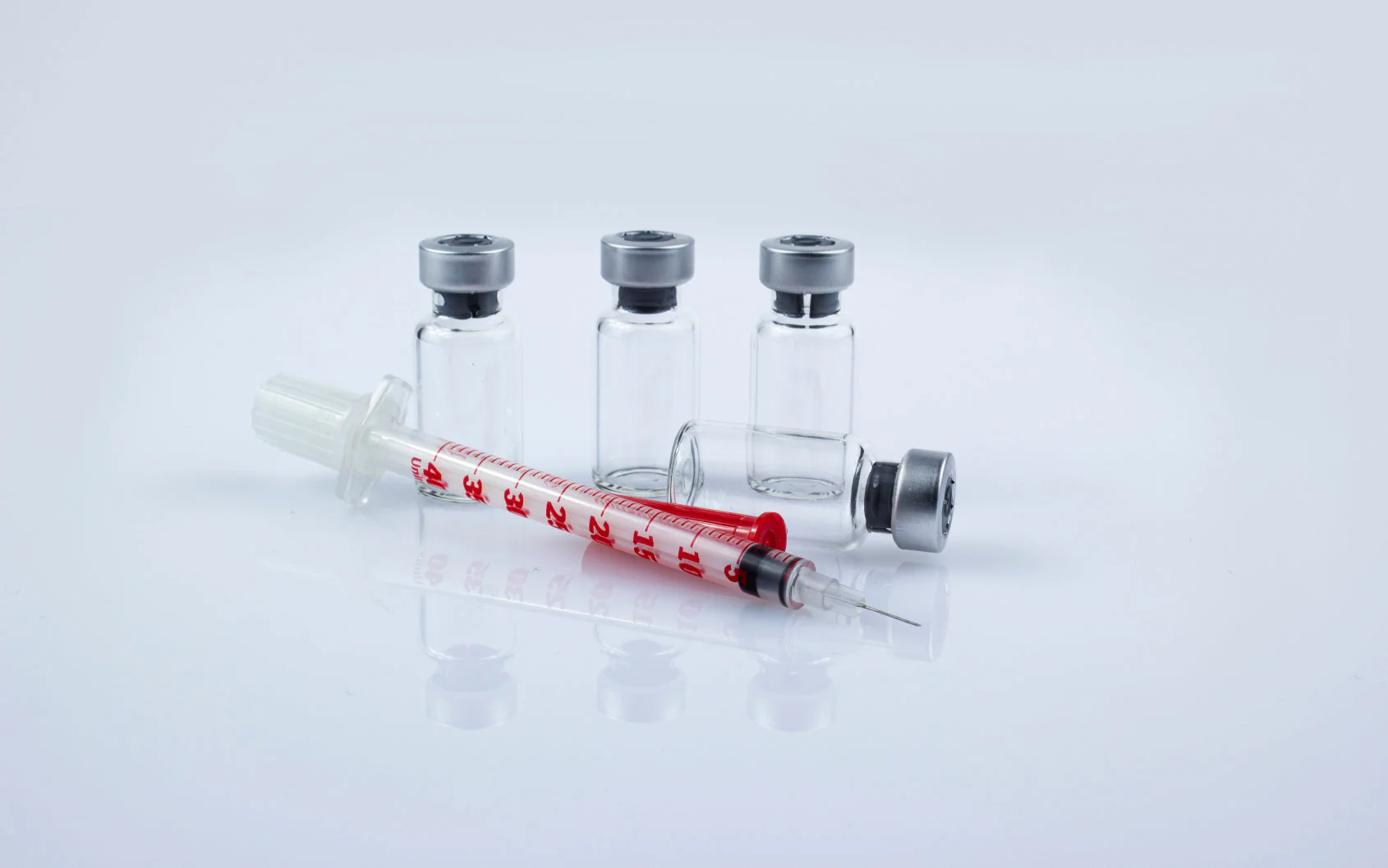
Peptides are short chains of amino acids — natural signaling molecules that your body uses to communicate healing and repair.
When it comes to gut health and mood, peptide therapy at Balanced Aesthetics + Wellness is one option your provider may discuss. Gut-focused peptides are studied for their role in:
- Supporting the integrity of the intestinal lining
- KPV: modulating inflammation in the gut
- TB-500 (Thymosin Beta-4 fragment): supporting tissue repair as part of a wider plan
Your provider decides whether peptides fit your plan, and which ones. At Balanced Aesthetics + Wellness, we only prescribe peptides dispensed by a licensed, accredited compounding pharmacy, never gray-market powders. Peptides are not FDA-approved for the uses discussed and are prescribed off-label at your provider’s discretion. Individual results vary.
Surprise Tips Most People Miss
Want to take your gut-mood game even further? Try these:
Chew more, rush less.
Digestion begins in the mouth. Chewing thoroughly activates enzymes and reduces post-meal bloating.
Time your meals to allow overnight fasting.
An overnight break from eating may support microbial balance; ask your provider what window suits you. Individual results vary.
Eat more polyphenols.
Berries, green tea, dark chocolate, and pomegranate all feed good gut bacteria while reducing oxidative stress.
Summary: Gut Health = Mood, Energy, and Resilience
- Your gut is your second brain, influencing everything from mood to motivation
- If you’re bloated, fatigued, anxious, or foggy — your digestion may be the missing link
- Start with foundational practices
- Ask your provider whether clinical peptides belong in your plan
- Supporting your gut is one of the most practical places to start. Individual results vary.
Ready to Feel Like Yourself Again?
Our provider-led team, with medical direction by Kimberly Gilbert, MD, looks at gut health with a thorough consultation, bloodwork where recommended, and personalized plans right here in Atlanta Georgia.
Frequently Asked Questions
— Sources & References
8›
Verified resources from our clinical research database.
BPC-157 Oral vs. Injectable — Route Changes Primary Target ↗
Oral BPC-157 is absorbed through the GI tract and primarily benefits gut health — healing the gut lining, reducing intestinal…
70% of the Immune System Resides in the Gut ↗
Approximately 70% of the immune system lives in the gut (gut-associated lymphoid tissue). This is why gut health optimization —…
90% of Serotonin Produced in the Gut ↗
Approximately 90% of the body's serotonin — the neurotransmitter most associated with mood regulation — is produced by enterochromaffin cells…
Gut-Brain Axis — Bidirectional Communication ↗
The gut-brain axis describes bidirectional signaling between the enteric nervous system and central nervous system via the vagus nerve, immune…
Leaky Gut (Intestinal Permeability) and Systemic Inflammation ↗
Increased intestinal permeability allows endotoxins (LPS) to enter the bloodstream, triggering systemic inflammatory cascades linked to anxiety, depression, brain fog,…
Overnight Fasting Improves Microbial Balance ↗
A 12-14 hour overnight fast improves microbial balance and insulin sensitivity. This simple dietary pattern supports gut microbiome diversity and…
Ep. 5: Tired, Bloated, Moody — The Hidden Root Causes ↗
Discussion of the interconnected causes of fatigue, bloating, and mood instability — covering gut health, hormone imbalance, inflammation, and how…
Larazotide Acetate — Tight Junction Modulator ↗
Larazotide acetate is a synthetic peptide that modulates intestinal tight junctions, reducing intestinal permeability (leaky gut). Originally developed for celiac…

Medically reviewed by Dr. Kimberly Gilbert, MD — Medical Director, Balanced Aesthetics + Wellness
 Previous Post
 Next Post