Microneedling has become one of the most popular skincare treatments for those looking to improve their skin’s texture, tone, minimize pores, and enhance overall appearance. But what exactly happens beneath the surface when tiny needles puncture the skin? The answer lies in the body’s natural healing response, particularly its ability to boost collagen production. Let’s dive into the science behind microneedling and how it works to rejuvenate the skin.
What is Microneedling?
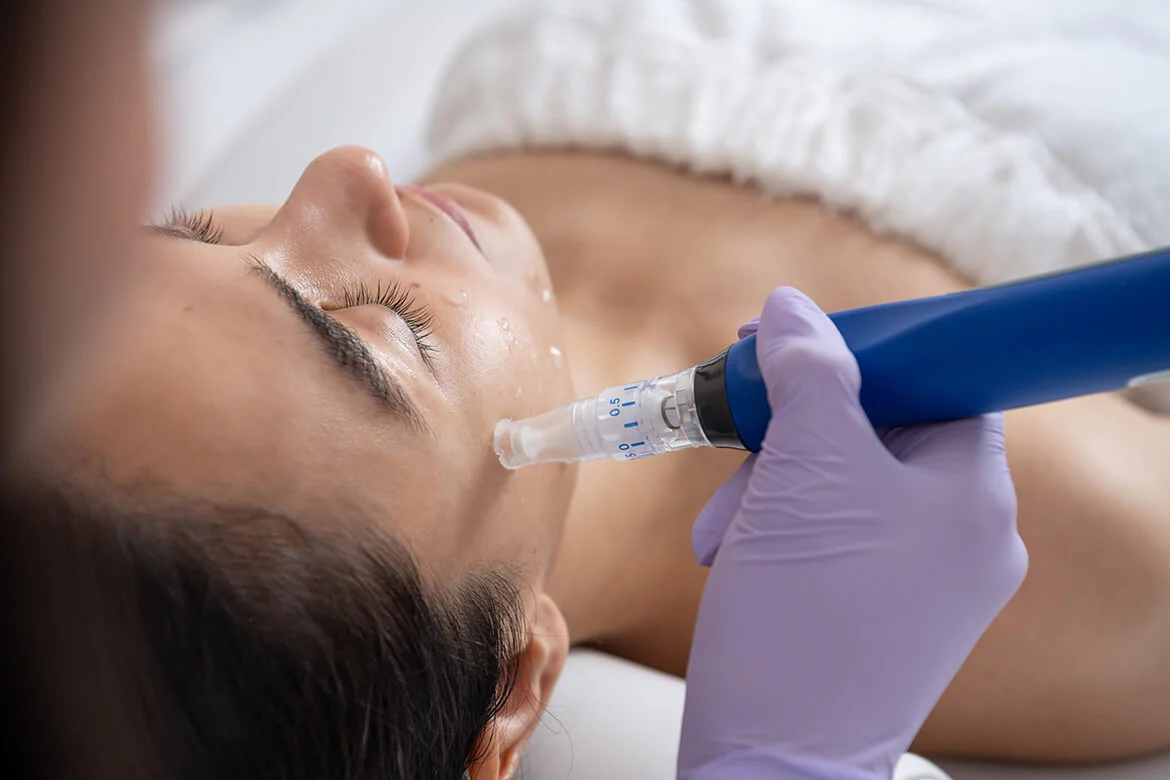
Microneedling, also known as collagen induction therapy (CIT), is a minimally invasive procedure that involves the use of fine, sterile needles to create micro-injuries in the skin. These controlled injuries stimulate the body’s natural wound-healing process, which includes inflammation, tissue remodeling, and collagen production.
The treatment can be performed using a derma roller or an electronic microneedling device, which varies in needle depth and speed. It is commonly used to treat acne scars, fine lines, wrinkles, enlarged pores, and overall skin laxity.
How Microneedling Boosts Collagen Production
Collagen is the primary structural protein in the skin, responsible for maintaining its firmness and elasticity. As we age, collagen production declines, leading to wrinkles, sagging, and a loss of youthful volume. Microneedling works by kickstarting collagen synthesis through three key phases:
Inflammation Phase: As the needles create tiny punctures, the skin’s immune system responds by triggering inflammation. This initial response helps disinfect the wounds, remove debris, and stimulate blood flow to the affected area.
Proliferation Phase: During this phase, fibroblasts, the cells responsible for producing collagen and elastin, become activated. New blood vessels begin to form, and the production of fresh collagen fibers starts to replace damaged tissue.
Remodeling Phase: The newly formed collagen matures and strengthens over time, leading to improved skin texture, elasticity, and resilience. This phase can continue for several months after the treatment, providing long-lasting benefits.
Additional Skin Benefits of Microneedling
Beyond collagen stimulation, microneedling offers a range of benefits that make it an effective skincare treatment:
Improves Skin Texture: Helps reduce the appearance of scars, rough patches, and uneven skin tone.
Minimizes Fine Lines and Wrinkles: By promoting collagen and elastin production, microneedling helps plump the skin and smooth out lines.
Enhances Product Absorption: The tiny channels created by microneedling allow serums, peptides, and other skincare products to penetrate deeper, making them more effective.
Reduces Hyperpigmentation: Helps fade dark spots, sun damage, and melasma by encouraging skin cell turnover.
Is Microneedling Safe?
Microneedling is generally safe for most skin types when performed by a trained professional. However, mild redness, swelling, and sensitivity are common temporary side effects. It’s important to follow post-procedure care instructions, such as avoiding direct sun exposure and using gentle skincare products.
Those with active acne, infections, or certain skin conditions like eczema should consult with a dermatologist before undergoing microneedling. Additionally, professional microneedling treatments offer more precise results than at-home derma rollers, which may carry a higher risk of improper use.
Microneedling is a scientifically backed skincare treatment that harnesses the body’s natural healing mechanisms to boost collagen and rejuvenate the skin. By stimulating the production of essential proteins like collagen and elastin, microneedling can help improve skin texture, reduce fine lines, and enhance overall skin health. Whether you’re looking to address acne scars, wrinkles, or dullness, this treatment offers a promising path to radiant, youthful skin.
Are you considering microneedling? Schedule a FREE skin consult today to determine if it’s the right option for your skin type and concerns!
Frequently Asked Questions
—Can microneedling help with oily skin?
Yes — microneedling can normalize sebaceous gland activity over time by promoting healthier dermal function and improved skin architecture. RF microneedling is particularly effective because the radiofrequency energy can selectively target sebaceous glands at specific depths, reducing oil production while stimulating collagen. Results develop gradually over a treatment series. For best outcomes with oily skin, combine microneedling with medical-grade skincare (niacinamide for oil regulation, retinoid for cell turnover, salicylic acid for pore maintenance) and periodic HydraFacials or salicylic peels for extraction and surface management.
—Can microneedling improve skin texture on the body?
Yes — microneedling can treat skin texture concerns beyond the face. Body areas commonly treated include the neck and décolletage (crepey skin, sun damage, fine lines), back (acne scarring), abdomen and thighs (stretch marks), arms (textural irregularities, crepey skin), and hands (thinning, aging skin).
RF microneedling (Secret Pro) is particularly effective on body skin because the radiofrequency energy produces thermal tightening alongside collagen stimulation — addressing both texture and laxity. Body skin is typically thicker than facial skin, which allows slightly more aggressive treatment depths.
Stretch marks on the abdomen, thighs, and hips respond to RF microneedling, with newer (red/purple) marks showing the most improvement. The treatment stimulates collagen and elastin within the scarred dermal tissue, progressively improving the texture and color of the marks over 3–4 sessions.
At Balanced, body microneedling can be combined with hyperdilute Radiesse or Sculptra in areas like the décolletage and hands for both textural improvement and volume restoration. BPC-157 peptide therapy supports the healing response for enhanced results.
Microneedling is one of the most effective treatments for acne scarring — particularly for rolling and boxcar scars where the goal is to stimulate collagen production that fills in depressed areas and smooth the skin surface.
The mechanism: microneedling creates controlled micro-injuries that trigger the wound-healing cascade. In scarred tissue, this breaks up the fibrous bands pulling the skin down (subcision effect) and stimulates new collagen and elastin production that replaces the disorganized scar tissue with healthier tissue.
RF microneedling is particularly effective because the radiofrequency energy adds thermal stimulation at precise depths — producing more robust collagen remodeling than mechanical needling alone. For moderate to severe acne scarring, RF microneedling is typically the recommended starting point.
Results are progressive: each session improves the scarring incrementally. Most patients see meaningful improvement after 3–4 sessions, with continued gains through 6 sessions. Deep ice-pick scars may need combination treatment (microneedling plus CO2 laser or TCA Cross).
At Balanced, PDGF microneedling (with concentrated growth factors) accelerates the collagen response in scarred tissue — the growth factors signal fibroblasts to produce collagen more aggressively than the mechanical injury alone would stimulate.
—Can microneedling improve acne-prone skin over time?
Yes — consistent microneedling series improve overall skin quality, reduce post-acne scarring, and normalize skin texture over time. Once active acne is controlled, microneedling stimulates collagen that fills depressed scars, refines enlarged pores, and improves the rough texture that acne leaves behind. RF microneedling is particularly effective because the thermal component tightens and remodels at deeper levels. A treatment plan of 4–6 sessions with ongoing maintenance produces progressive transformation.
Yes — microneedling (both traditional and RF) is safe for Fitzpatrick skin types I through VI. The mechanism is mechanical and thermal rather than pigment-dependent, which makes it one of the safest collagen-stimulating treatments for darker skin tones. RF microneedling with insulated needles is particularly safe because energy is delivered beneath the melanin-rich epidermis. Minor post-inflammatory hyperpigmentation is possible but significantly less likely than with laser treatments.
—What results can I expect from RF microneedling on the jawline?
RF microneedling on the jawline produces gradual but meaningful tightening and definition. The radiofrequency energy contracts tissue and stimulates collagen along the mandibular border, producing a more defined jaw-to-neck transition and reducing early jowling. After 3–4 sessions, most patients see improved jawline definition visible in profile view, reduced appearance of early jowling, smoother skin texture along the jaw, and better jaw-to-neck angle distinction. Results develop progressively over 4–12 weeks after each session as collagen matures. RF microneedling won’t replicate a surgical facelift for patients with significant skin laxity — but for patients with mild-to-moderate jowling and jawline softening, it produces visible improvement without surgery. At Balanced, jawline RF microneedling is often combined with jawline filler (for structural definition) and masseter Botox (for facial slimming) for comprehensive lower-face rejuvenation.
Justin Kitchens is a board-certified Family Nurse Practitioner (FNP-C) and functional medicine practitioner at Balanced Aesthetics + Wellness in Atlanta, GA. He specializes in peptide therapy, hormone optimization, medical weight loss, and regenerative wellness. Justin holds an MS in Family Practice Nursing from Mercer University and an MBA from Kennesaw State University.







 Previous Post
 Next Post





 FREE Red Light Bed Session for your Gift Recipient