GLP-1 medications have earned their place as powerful tools for weight loss, appetite control, and insulin sensitivity. But at Balanced Aesthetics + Wellness, we go a step further — not just helping our patients lose weight, but helping them rebuild health from the inside out.
That’s why our gold standard treatment model includes GLP therapy paired with targeted peptide plans — a combination designed to support fat loss, lean muscle, energy and long-term wellness beyond the number on the scale. Individual results vary.
Here’s why we design it this way, and why we believe this combined approach gives your results the strongest foundation to last.
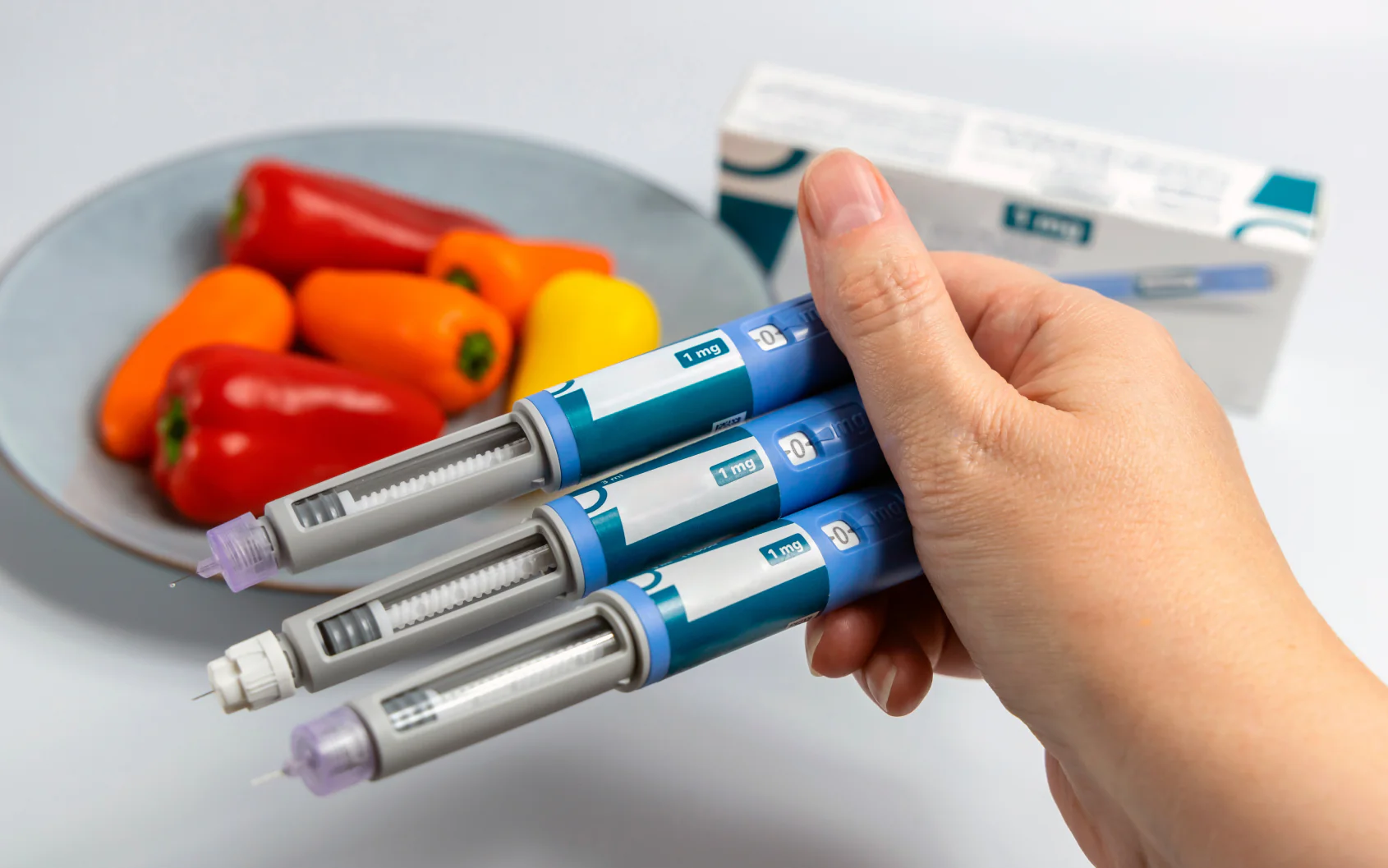
GLP-1 receptor agonists like GLP-1 therapy mimic a natural hormone your gut releases when you eat. They:
Regulate blood sugar
Improve insulin sensitivity
Slow gastric emptying (so you feel full longer)
Decrease appetite and cravings
For many patients, this translates to significant fat loss, improved glucose control, and a break from emotional eating cycles — especially when paired with mindful nutrition.
But there’s a catch… GLPs don’t differentiate between fat and muscle when weight loss occurs. And while they reduce body weight effectively, they don’t stimulate the regenerative or protective pathways needed to preserve lean mass, repair tissue, or restore energy.
That’s where peptide therapy comes in.
Why Peptides Are the Essential Pairing with GLPs
Peptides act as cellular signalers — supporting the repair and recovery systems in your body. Alongside GLP therapy, they are studied for their role in:
Lean muscle during fat loss
Support mitochondrial function and energy while appetite is reduced
Protect joints and connective tissue under reduced caloric intake
Enhance sleep, hormone balance, and recovery
These are the areas we plan around so the goal is more than weight loss. Individual results vary.
Our Most Effective GLP-Peptide Pairings
Here’s how we typically design this dual approach:
A GLP-1 medication
Scheduled by your provider
Controls hunger and stabilizes blood sugar
Promotes steady, sustained fat loss
Lowers insulin resistance
Paired with:
Tesamorelin or peptide therapy
Studied for natural growth hormone (GH) release
Support for lean muscle
Supports fat metabolism, recovery, and tissue repair
Support for deep sleep and recovery
peptide therapy
Protects gut integrity and connective tissue
Reduces systemic inflammation
Accelerates healing from exercise, strain, or injury
5-Amino-1MQ
Support mitochondrial energy and fat metabolism
Support muscle endurance and metabolic flexibility
DSIP or Dihexa
Support restful sleep, which matters for recovery during weight loss
Dihexa: support steady focus and motivation during a calorie deficit
Your provider decides which of these, if any, fit your labs, health history and goals.
By combining the appetite suppression and metabolic control of GLPs with the regenerative and protective action of peptides, you’re not just losing — you’re rebuilding.
The Muscle Loss Problem — And How We Plan Around It
Without peptide protection, patients on GLPs alone can see up to 30% of weight loss come from lean mass — including muscle and bone.
This is not just a cosmetic issue — it’s a metabolic liability.
Muscle is your metabolic engine. Losing it:
Slows your resting metabolism
Increases fatigue
Raises your risk of rebound weight gain
Weakens your physical function and hormonal balance
When we include peptides, we protect and even build muscle during fat loss. Patients feel stronger, recover faster, and sustain results without the burnout or crash common with weight loss-only approaches.
The Goals We Design Around
Patients on our GLP + peptide protocols typically report:
More toned and defined physiques, even while losing fat
Fewer energy crashes during the day
Easier workouts and faster recovery
Improved skin and joint health
More restful sleep and better mood
The aim is not just a lighter number on the scale, but a stronger, more resilient you. Individual results vary.
Final Thoughts: Why It’s the Gold Standard
Weight loss is only one piece of the puzzle. Our mission is to help you optimize — your metabolism, your body composition, your cognition, and your longevity.
That’s why our gold standard is not GLPs alone — it’s GLPs plus peptides, planned together by your provider.
When your program is built this way, the goal is more than weight loss: it is a stronger, sharper, more energetic version of yourself.
Ready to explore a GLP-1 and peptide plan built around you? Book your consultation and let’s design a plan for your metabolism, muscle, and long-term goals. Individual results vary. Consultation with a provider required.
FAQs About GLP + Peptide Therapy
Q: Can I take GLP therapy without peptides? Your provider decides. Without muscle-protective support, some of the weight you lose can be muscle. Our combined approach is designed to help protect lean mass and support whole-body health.
Q: How soon will I see results? Timing differs from person to person. Your provider will walk you through what to expect for your plan and track your progress at each follow-up.
Q: Is GLP + peptide therapy safe? No therapy is right for everyone. Your provider reviews your labs, health history, and goals to decide whether this approach is appropriate for you, then monitors you throughout.
Q: Do I have to take injections weekly? Your provider sets the peptide, the method, and the schedule for each part of your plan after your evaluation, and our team walks you through it so it’s easy to follow.
Q: Is this program only for weight loss? No. Many patients also choose it for muscle preservation, longevity, recovery, and improved cognitive performance.
Frequently Asked Questions
—What makes a good candidate for GLP-1 weight loss?
GLP-1 medications (GLP-1 therapy) are appropriate for adults with BMI ≥30 (obesity) or BMI ≥27 with at least one weight-related comorbidity (hypertension, type 2 diabetes, dyslipidemia, obstructive sleep apnea). However, at Balanced, candidacy assessment goes deeper than BMI.
Ideal candidates include patients who have tried diet and exercise without sustained success (indicating metabolic dysfunction rather than lack of effort), patients with insulin resistance or prediabetes (GLP-1s address the metabolic root cause), patients whose weight gain correlates with hormonal changes (menopause, andropause, thyroid dysfunction), and patients who are ready for a comprehensive approach (not just seeking a quick-fix injection).
Patients who may not be ideal candidates: those with personal or family history of medullary thyroid carcinoma or MEN2 syndrome (contraindicated), history of pancreatitis (relative contraindication), active eating disorders (GLP-1s can worsen disordered eating patterns), and patients seeking a standalone solution without willingness to address nutrition and lifestyle.
At Balanced, the initial consultation and comprehensive labs determine not just whether you qualify, but whether GLP-1 therapy is the right metabolic intervention for your specific situation.
Peptides can support weight loss, but they work differently than GLP-1 medications like GLP-1 therapy. Rather than suppressing appetite directly, body composition peptides like Tesamorelin target visceral fat metabolism by restoring growth hormone signaling. Individual results vary.
At Balanced, our gold standard approach for medical weight loss pairs a GLP-1 medication with supportive peptide therapy. The GLP-1 drives appetite regulation and metabolic signaling. The peptides — particularly growth hormone secretagogues — help protect lean muscle mass during weight loss, support metabolic function, and reduce fatigue that patients sometimes experience on GLP-1 therapy alone.
This combination approach addresses one of the biggest concerns with GLP-1 medications: muscle loss alongside fat loss. By supporting growth hormone levels during active weight loss, peptides help preserve the lean tissue that keeps your metabolism healthy long-term.
Peptides alone are not a weight loss solution for patients who need to lose significant body fat. But they can be part of a comprehensive metabolic plan, including for maintaining results after the active weight loss phase.
—What is the difference between single- and dual-pathway GLP-1 medications?
GLP-1 therapy is a GLP-1 receptor agonist — it activates one hormonal pathway involved in appetite regulation and blood sugar control. GLP-1 therapy is a dual GIP/GLP-1 receptor agonist — it activates two pathways simultaneously, which is why clinical data has shown it may produce greater weight reduction in some patients.
In head-to-head clinical comparisons, GLP-1 therapy has generally demonstrated higher average weight loss percentages than GLP-1 therapy at comparable treatment durations. However, individual response varies significantly — some patients respond better to GLP-1 therapy, others to GLP-1 therapy. Biology matters more than averages.
The side-effect profiles are similar: nausea, particularly during dose escalation, is the most common for both. GLP-1 therapy’s dual mechanism may produce different GI effects in some patients. Both require gradual dose titration to minimize side effects.
At Balanced, the choice between GLP-1 therapy isn’t made by trend or preference — it’s made by your metabolic profile, treatment history, and how your body responds. Some patients start on one and switch to the other based on results and tolerability. Your provider guides that decision based on your labs and clinical response.
—GLP-1 therapy vs. GLP-1 therapy for weight loss — which should I choose?
The choice between a single- and a dual-pathway GLP-1 medication should be made with your provider based on your metabolic labs, health history, and treatment goals — not based on social media trends or what worked for someone else.
Both medications are effective for weight management. Tirzepatide’s dual GIP/GLP-1 mechanism may offer advantages for people with significant insulin resistance, as the GIP pathway plays a role in glucose metabolism beyond what GLP-1 alone addresses. GLP-1 therapy has the longer track record and more extensive safety data.
Factors your provider considers: your baseline metabolic panel (insulin, A1c, fasting glucose), body composition, hormonal status, prior medication history, GI sensitivity, and your specific weight loss goals. Cost and availability may also play a role — the landscape for both medications continues to evolve.
At Balanced, we frequently see patients who’ve tried one medication through a telehealth company or their PCP and felt unsupported. The medication itself is only part of the equation. The program around it — labs, monitoring, peptide support, nutritional guidance — is what determines whether you get lasting results or just a temporary number on the scale.
Tirzepatide, a dual-pathway GLP-1 medication, activates two hormone receptors simultaneously: GLP-1 and GIP (glucose-dependent insulinotropic polypeptide). This dual mechanism produces appetite suppression and improved metabolic signaling through two complementary pathways rather than one.
The GLP-1 component reduces appetite and slows gastric emptying — the same effects as a single-pathway GLP-1 medication. The GIP component adds additional metabolic benefits: improved insulin sensitivity, enhanced fat metabolism, and potentially greater impact on visceral fat stores. Together, the dual pathway may produce more comprehensive metabolic improvement than GLP-1 alone.
Like single-pathway GLP-1 medications, it is given as a subcutaneous injection that your provider increases gradually, which helps your body adjust and keeps early GI side effects to a minimum.
The practical result for patients is often described as a quieting of the “food noise” — the constant mental chatter about eating, cravings, and willpower that makes weight management exhausting. When that signal quiets, patients can focus on building sustainable habits rather than fighting their biology.
—Why does Balanced combine GLP-1 with peptide therapy?
Because a GLP-1 medication alone solves the appetite problem but can create new ones — muscle loss, fatigue, bone density concerns, and metabolic rebound risk. Peptide therapy addresses all of these.
Our gold standard protocol pairs the GLP-1 (GLP-1 therapy) with growth hormone secretagogue peptides that help preserve lean muscle mass during active weight loss. When your appetite drops significantly, your caloric intake drops, and without intervention, your body will catabolize muscle tissue alongside fat. Growth hormone support counteracts that by maintaining the anabolic signaling that protects lean mass.
The combined approach is designed to help you keep your energy steady through the program; fatigue is a common complaint with a GLP-1 medication alone, particularly in the first weeks.
This approach also sets up a better transition off the GLP-1 medication. Patients who preserve muscle during weight loss have a higher resting metabolic rate when they discontinue the medication, which may help lower the risk of weight regain. Individual results vary. At Balanced, the goal isn’t just weight loss — it’s sustainable body composition change.
—Does insurance cover GLP-1 medications for weight loss?
Insurance coverage for GLP-1 medications varies significantly by plan, medication, and indication. Some insurance plans cover brand-name GLP-1 therapy (GLP-1 therapy) or GLP-1 therapy (GLP-1 therapy) for weight management with specific BMI or comorbidity requirements. Many plans do not cover them for weight loss, or require extensive prior authorization.
Compounded GLP-1 medications — which are what many weight loss clinics, including Balanced, prescribe — are generally not covered by insurance because they are compounded formulations rather than brand-name products.
At Balanced, our medical weight loss program operates on a direct-pay model. This simplifies the process — no prior authorization delays, no insurance gatekeeping on your treatment decisions, and your provider prescribes based on what your labs indicate rather than what an insurer approves.
We understand cost is a factor, and we’re transparent about pricing during the consultation. Our packages and memberships are designed to make ongoing treatment more accessible. A supervised program with labs, peptide support, and ongoing monitoring gives you far more than a prescription alone.
—What is the difference between GLP-1 therapy and older weight loss drugs?
The fundamental difference is mechanism and metabolic impact. Older weight loss medications — phentermine, orlistat, sibutramine — primarily worked through appetite suppression (stimulant effect), fat absorption blocking, or central nervous system manipulation. They didn’t address underlying metabolic dysfunction.
GLP-1 and GIP/GLP-1 medications work through hormonal pathways that regulate appetite, blood sugar, insulin sensitivity, and metabolic signaling. They don’t just make you eat less — they improve how your body processes and stores energy. This produces more comprehensive metabolic improvement alongside weight loss.
The safety profiles are also dramatically different. Older medications carried significant cardiovascular risks (sibutramine was pulled from market), liver damage risk (orlistat), or abuse potential (phentermine). Some brand-name GLP-1 medications have been studied for cardiovascular outcomes in specific patient groups; your provider can explain what applies to you.
The other major difference is sustainability. Older drugs provided temporary appetite suppression with minimal lasting metabolic change. Used as part of a comprehensive program, GLP-1 therapy can support improvements in insulin sensitivity and metabolic health; keeping them after treatment depends on the habits and lean muscle you build along the way. Individual results vary.
Combining GLP-1 receptor agonists with growth hormone-releasing peptides helps preserve lean muscle mass during weight loss. Without peptide support, up…
Tirzepatide activates both GIP and GLP-1 receptors simultaneously, targeting two metabolic pathways. The GLP-1 component suppresses appetite; the GIP component…
Multiple clinical trials (including LEADER) have demonstrated cardiovascular protective effects of GLP-1 receptor agonists, including reduced major adverse cardiovascular events…
Justin Kitchens is a board-certified Family Nurse Practitioner (FNP-C) and functional medicine practitioner at Balanced Aesthetics + Wellness in Atlanta, GA. He specializes in peptide therapy, hormone optimization, medical weight loss, and regenerative wellness. Justin holds an MS in Family Practice Nursing from Mercer University and an MBA from Kennesaw State University.








 Previous Post
 Next Post