







Are Peptides Legal?
Are peptides legal if the vial you were about to order says “for research use only, not for human consumption”?
You have probably already read the forum threads, the FDA bulk substances list, and two contradictory takes on BPC-157. The question you are actually asking is narrower: legal for whom, obtained how, and prescribed by whom. That distinction is the whole answer.
Key Takeaways
- Peptides are legal in the United States when prescribed by a licensed provider and prepared by a licensed, accredited U.S. compounding pharmacy.
- Compounded medications, including most therapeutic peptides, are not FDA-approved as finished drug products — that is a regulatory status, not a safety verdict.
- Peptides sold online labeled “for research use only” are not approved for human use and carry no prescriber, no evaluation, and no oversight.
- Peptides and anabolic steroids are different categories: peptides signal your own production pathways rather than replacing hormones from outside.
- Whether a peptide belongs in your plan depends on your history, your goals, and what your provider finds at consultation.
In this article
Are peptides legal in the United States?
You’re working within the law when a licensed provider prescribes your peptide and a licensed, accredited U.S. compounding pharmacy prepares it. The legality sits in the pathway, not in the molecule.
That is why the same peptide can be lawful medicine in your hands and an unapproved chemical in someone else’s. The prescription and the pharmacy are the legal line.

You are not breaking a law by being curious. You step outside the prescription pathway the moment you buy an injectable from a website that never asked for a provider’s name.
What does “not FDA-approved” actually mean?
You already know most therapeutic peptides used in regenerative wellness are not individually FDA-approved as finished drug products. You get them prescribed as compounded medications, and compounded medications are not FDA-approved. That phrase describes a regulatory category, not a judgment about the molecule.
You’re working within a system that has been part of American medicine for decades. It exists because mass-manufactured products do not cover every clinical situation your provider encounters. Your provider writes the prescription; a licensed, accredited U.S. compounding pharmacy prepares it.
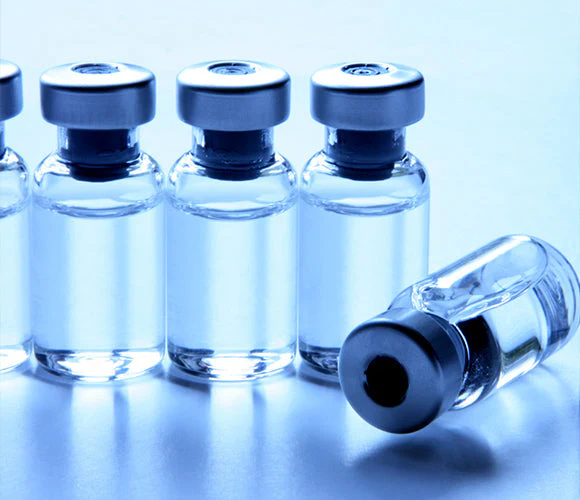
- FDA-approved drug. A specific manufacturer’s product, for a specific indication, reviewed and cleared as a finished product.
- Compounded medication. Prepared by a licensed pharmacy on a provider’s prescription. Not FDA-approved as a finished product.
- Research chemical. Sold with no prescriber, no evaluation, and explicit labeling against human use.
Those three rows are not shades of the same thing, and you know it. Any page that blurs them is selling you something. If you have read the literature on BPC-157 or TB-500, you already know the human trial base is thin — and we are not going to pretend otherwise.
“Not FDA-approved” and “unregulated” are not synonyms, and neither one means “well-studied.”Why does the label say “research use only”?
Online peptide vendors label products “for research use only” and “not for human consumption” because that language keeps them outside prescription drug rules. It is a legal position, not a quality statement.
Some independent testing of gray-market peptides has reported contamination with heavy metals, bacterial endotoxins, and incorrect amino acid sequences. You are the one holding the syringe.

If you are currently self-directing with gray-market vials and want to move to supervised care, that conversation happens at Balanced Aesthetics + Wellness without judgment. Some of the most informed people we meet arrive exactly that way.
Are peptides a legal workaround for steroids?
Peptides and anabolic steroids are different pharmacological categories, and treating peptides as a legal steroid substitute misreads both. The mechanisms run in opposite directions.
Anabolic steroids introduce hormone from outside and suppress your own production over time. Peptides act as secretagogues or signaling molecules — they prompt your own pituitary, your own repair pathways. One replaces; the other signals.

| Dimension | Prescribed peptides | Anabolic steroids |
|---|---|---|
| Mechanism | Signal your own production and repair pathways | Introduce exogenous hormone that overrides production |
| Effect on your own output | Works with existing signaling | Suppresses endogenous production over time |
| Legal route | Provider prescription, licensed compounding pharmacy | Controlled substance in the U.S. |
| Oversight | Provider review, scheduled follow-up | Often none when obtained outside medicine |
Side effects exist in both columns. Every injectable carries some risk, and your provider walks through the specific safety profile for anything considered in your plan.

How do you verify where a peptide came from?
You verify a peptide’s origin by asking your provider to name the pharmacy, then confirming that pharmacy holds a current state license. Any clinic that will not name its source has told you something.
At Balanced Aesthetics + Wellness, every peptide we prescribe comes from licensed, accredited U.S. compounding pharmacies. We will tell you which one, without being asked twice.
- Name the pharmacy. Not “a reputable partner” — the actual licensed entity.
- Confirm the prescriber. A licensed provider must evaluate you before anything is written.
- Ask what is uncertain. A provider fluent in the literature will tell you where human data is thin.
- Ask about breaks. Receptor signaling adapts to constant stimulation, which is why your provider builds regular breaks into your plan.
- Ask about follow-up. If your provider recommends bloodwork, it can include a 60+ biomarker panel.
That last item is the one most people skip. Peptide signaling is not a set-and-forget input, and a plan without scheduled reassessment is a product, not care. If you want the mechanism side first, start with how peptide therapy actually works and then come back to sourcing.
Where the money actually goes
You are not paying for a vial. A vial is the cheapest part of this, which is exactly why gray-market pricing looks attractive.
You are paying for provider evaluation, a named licensed pharmacy, and the follow-up that catches a plan that is not working. Price the oversight, not the milligrams.

What legal access looks like in Atlanta
If you’re pursuing legal peptide access in Atlanta, it starts with a consultation and provider review, not a shopping cart. We run a concierge, provider-led practice in Brookhaven with medical oversight, and that structure is what makes the prescription pathway possible for you.
We build your care as a full-spectrum plan rather than a single item off a menu. If peptide therapy fits, it sits alongside hormone balance, pain relief, skin rejuvenation, digestive health, and regenerative modalities including the Hyperbaric Chamber and the Prism Red Light Pod.
Local access matters more than it sounds. If you want to see the full menu before you book, the peptide therapy program in Atlanta lays out what we offer and who it suits.
A 5.0 average across hundreds of Google reviews tells you something about the experience. It won’t tell you whether a peptide belongs in your plan — only your provider’s evaluation can.

Questions people ask
Are peptides FDA-approved?
Most therapeutic peptides used in wellness and regenerative medicine are not individually FDA-approved as finished drug products. They are prescribed as compounded medications by a licensed provider and prepared by licensed, accredited U.S. compounding pharmacies, and compounded medications are not FDA-approved. That status is a regulatory category, not a safety verdict. What matters most is the source. At Balanced Aesthetics + Wellness, every peptide we prescribe comes from licensed, accredited U.S. compounding pharmacies, never research-chemical or gray-market products. Ask any clinic to name its pharmacy before you agree to anything.
Can I buy peptides online without a prescription?
You can find peptides for sale online, but they are almost universally labeled “for research use only” and “not for human consumption.” Buying them for personal use means accepting unknown purity, unverified potency, and zero clinical oversight. Peptides prescribed for therapeutic use in the United States require a prescription from a licensed provider and are prepared by licensed, accredited U.S. compounding pharmacies. If you are currently using gray-market peptides and want to move to supervised care, that is a conversation we have regularly, without judgment.
Are peptides the same as steroids?
No. Anabolic steroids introduce hormone from outside your body, which overrides and eventually suppresses your own production. Peptides work the opposite way — they signal your own pituitary, growth factor, or repair pathways rather than replacing anything. Steroids carry well-documented risks including liver strain, cardiovascular effects, and hormonal suppression. Peptides prescribed and monitored by a licensed provider and sourced from licensed pharmacies still carry risks, and your provider reviews them with you. The confusion is understandable because both come up in fitness communities, but pharmacologically they are separate categories.
In-clinic peptide therapy vs. online peptide companies — what’s safer?
In-clinic peptide therapy is safer because a licensed provider evaluates you, prescribes, and monitors the plan. Online vendors sell products explicitly not intended for human use, with no evaluation, no dosing judgment, and no follow-up. Peptides are pharmacologically active molecules, so the wrong one, the wrong amount, or a contaminated vial can cause harm. A recovery peptide from a licensed U.S. compounding pharmacy is a different product from one bought overseas, even when the name on the label matches.
How does Balanced source its peptides?
Balanced Aesthetics + Wellness sources every peptide from licensed, accredited U.S. compounding pharmacies, and compounded medications are not FDA-approved. We do not use research-chemical or gray-market products at any point. Your provider can tell you the specific pharmacy behind any peptide in your plan, because sourcing transparency affects both your safety and what you can reasonably expect. Ask us the question directly at your consultation — we would rather you did.
— Sources & References
4›
Verified resources from our clinical research database.
Peptide Cycling Prevents Receptor Desensitization ↗
Just like insulin receptors can become resistant with constant sugar exposure, peptide receptors downregulate if overstimulated. Standard protocols follow 5-days-on/2-days-off…
Pharmaceutical-Grade vs. Research-Grade Peptides ↗
Independent testing of gray-market peptides has found contamination with heavy metals, bacterial endotoxins, incorrect peptide sequences, and concentrations far above…
Most Peptides Not Individually FDA-Approved ↗
Most therapeutic peptides used in wellness are not individually FDA-approved as finished drug products. They are prescribed as compounded medications…
Anabolic steroids suppress endogenous hormone production ↗
Exogenous anabolic steroid use introduces hormone from outside the body, which over time downregulates and suppresses the body's own natural…

Medically reviewed by Dr. Kimberly Gilbert, MD — Medical Director, Balanced Aesthetics + Wellness
 Previous Post